If you’re looking for high-quality garden sheds, you’ve come to the right place. We have a vast selection of the best quality garden sheds, which are ready and waiting for you to discover. How do you choose the best shed for your garden? Please keep reading for our top tips to help you find the perfect shed for your outdoor space.
Sheds are an essential item in every garden. Garden sheds are often so much more than simply a place to store your lawn mower and tools. These buildings provide shelter and a place to potter about, and they are the perfect place to spend time on your hobby or interest. So, when you are looking for sheds for sale, you need to choose one that matches your needs.
When you start shopping for outdoor sheds, it’s vital to remember that not all sheds are the same. There can be a vast difference between mass-produced storage sheds and carefully crafted bespoke garden sheds. So, making the right choice is essential before you part with your cash.
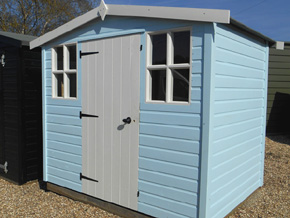
Painted Options
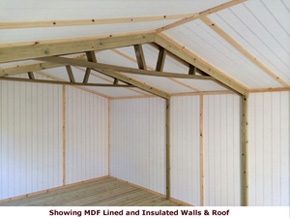
Insulated Range
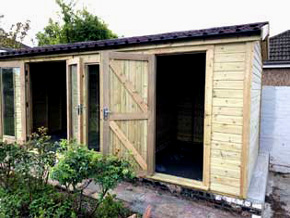
Combo Workshops
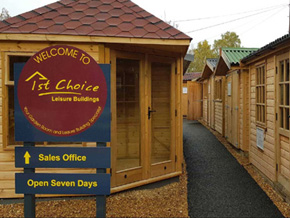
Garden Buildings Show Rooms
Choosing the right garden building is essential to ensure you get many years of use from it. However, knowing what to look for and where to start can be challenging. Here are some of the key considerations to keep in mind when you start shopping for garden sheds:
Before you even begin shopping for your new garden shed, it’s helpful to think about its primary purpose. Are you looking for a garden building to provide shed storage? You may want a shed that can be used as a man cave or hobby space. Or will your new shed be a multi-purpose building?
Functionality is so important when you’re looking at sheds for sale. Understanding how you will use your shed will help you find the perfect design to match your needs.
At 1st Choice Leisure Buildings, we can custom design your shed with fittings to suit your every requirement. This includes adjusting the positioning of the shed’s doors and windows. We can also add various custom fittings to suit. We even have insulated sheds available so you can comfortably use your new garden building all year round.
Like functionality, size is a vital consideration when choosing your new shed. You certainly want to avoid buying a shed and finding it too small for your needs. Likewise, you want to avoid ordering one and then realise that your outdoor space can’t accommodate it.
Measuring your space and deciding on the best shed size for your needs is essential. At 1st Choice Leisure Buildings, we know it can be challenging to visualise how a shed will look in your garden based on measurements alone.
Looking at sheds online can also be helpful. However, seeing them on a computer screen is no substitute for viewing them up close. You can only really appreciate the quality of the materials and the construction standard when you see sheds yourself. This is why we have display sites available, where you can visit our vast selection of sheds in person to find the best for your needs.
In addition to ensuring that your new shed is functional, it must look good. While shed storage may be the reason you’re searching for sheds for sale, looks matter, too. After all, a shed is a prominent feature in your garden, so it must look attractive. To ensure that your new shed adds aesthetic appeal to your garden, we have a wide choice of shed designs available.
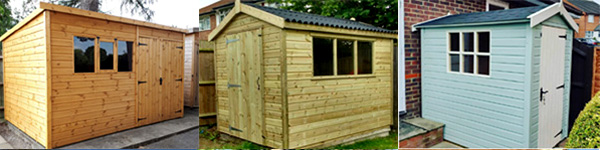
We also have an excellent selection of painted sheds in various colours. Choosing one of these is guaranteed to bring a pop of colour to your garden. In addition to adding colour, choosing a painted shed also provides it with some extra protection against the elements, helping to ensure that it stays looking good for longer.
When you want a shed that looks attractive and will be a practical addition to your garden for many years, you must choose the best quality option. Sheds made from poor-quality timber and those not treated during the construction process can often develop issues quickly.
Buying DIY shed kits to construct yourself can seem like a helpful way to save money. However, this is often a false economy. In some cases, it may be of inferior quality and require repairs or replacement soon after you buy it. The problem is that when you buy your shed online, you miss seeing it with your own eyes and examining it more closely. At 1st Choice Leisure Buildings, we’re proud of the quality of our sheds. In fact, we’re so proud of our garden buildings that we encourage you to come along to visit our display sites to see the quality for yourself.
Being constantly exposed to the elements can take its toll on a shed. Outdoor sheds are continually subjected to heavy rain, strong winds, and freezing temperatures. For many garden sheds, these conditions can lead to leaking roofs, warped timber, and potentially damage to the shed’s structure. It would be best to have a shed designed and installed to the highest standard to avoid these issues.
You should be able to depend on your shed to keep your items safe and secure inside. To achieve this, all of our buildings are constructed with high-quality timber and are designed to last.
Unless you have the expertise and tools to install the shed perfectly, its durability can be impacted. Even a high-quality shed can develop problems if it isn’t assembled correctly. Our free installation service means our sheds are always carefully assembled by our experienced team to ensure maximum durability and robustness against the elements. This provides extra peace of mind because you have a new garden shed built to last.
Garden shed kits are readily available and can often be picked up relatively cheaply. While putting one together may seem simple, it can be harder than it looks. You also need to ensure that you have someone to help you with the installation process and the essential tools needed to do the job properly.
One common issue is that not all garden shed kits are constructed with pieces that fit together perfectly. When you start attempting to assemble the kit, you may find that pieces need to be added or matched up correctly, which creates big problems from the start.
Unless your garden shed kit contains all the necessary pieces and can be fitted together perfectly, it will be impossible to construct it to a high standard.
Here at 1st Choice Leisure Buildings, you don’t need to worry about assembling your new shed. Instead, we will take care of that and offer free shed installation for you. So, all you need to do is sit back, relax, and leave all the hard work to us.
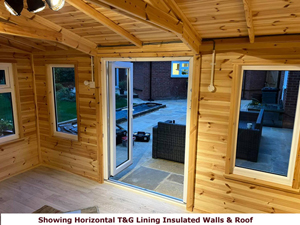
Horizontal T&G Lining
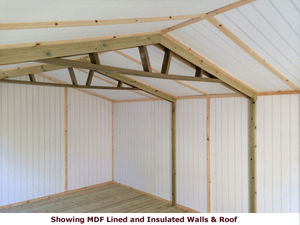
MDF Lining & Insulation
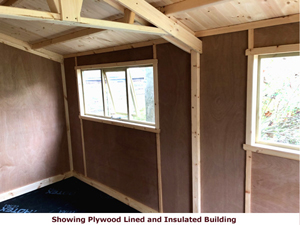
Insulated Ply Lining
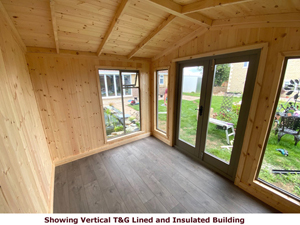
Vertical T&G Lining
Here at 1st Choice Leisure Buildings, we pride ourselves on our high-quality sheds and garden buildings. So, whether you’re looking for storage sheds or potting sheds to use as a hobby room, we have the perfect solution to all your shed-related needs.
Here are just some of the reasons that our customers choose us for their garden sheds:
Choosing the highest quality shed for your garden is essential. After all, this is a building that will need to withstand the elements and should last for many years.
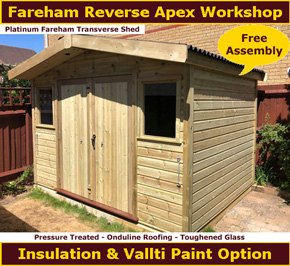
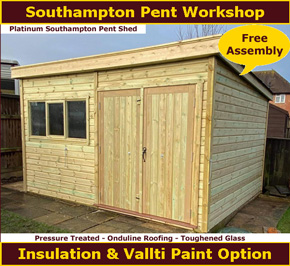
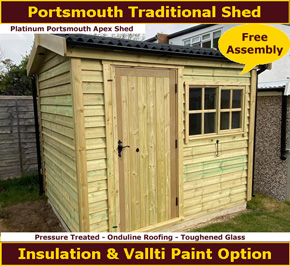
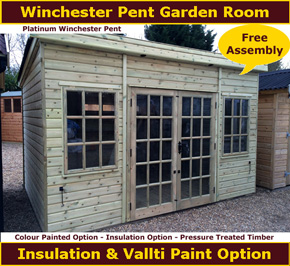
Our sheds are of premium quality and made from durable materials to ensure optimal durability. Our Platinum sheds are also constructed using pressure-treated timber, feature toughened glass windows, and optional Onduline roofing, making them extra robust.
Whether you want a shed with windows, an apex or a pent shed, we can help. We have narrow sheds, transverse sheds, corner sheds, and every type of shed you can think of. We even offer bespoke sheds specially made to match your exact requirements.
We understand that choosing your shed is a big decision. Deciding when you can only see photos of sheds online can be challenging. You should be able to see sheds up close before you decide to buy, which is why we have a display site where you can view dozens of our sheds in person. So, if you would like to view our sheds in person before buying, we’ll be happy to help.
Choosing a shed is a personal decision. A shed that meets one person’s needs may not be suitable for another. At 1st Choice Leisure Buildings, we understand the importance of having a shed that offers optimal functionality for your individual needs. This is why we offer a bespoke shed design and construction service.
We can work with you to create the ideal shed design to perfectly match your exact needs while maintaining the highest standard of quality. This includes fitting the shed out with bespoke shelving and organisation solutions so you can get the most out of your new space.
Our customers love our fast and reliable service. We work hard to construct your shed to match your deadline and pride ourselves on delivering your shed on time without compromising on quality.
Once we have delivered your shed, you can depend on us to construct it efficiently and to the highest standard. Thanks to our hassle-free service, it will be delivered, installed, and ready for use before you know it.
There’s no need to worry about high delivery charges when you order your garden shed from us. We offer FREE delivery of our sheds to large parts of the UK, making it even cheaper and easier for you to receive your perfect shed.
Attempting to install a shed can quickly become frustrating. Gathering the right tools for the job, enlisting someone to help you, and perfectly aligning all the components is challenging. What seems like a simple shed installation can quickly become very stressful.
Thankfully, we take care of every aspect of the installation on your behalf. The even better news is that we do this free of charge. So, you can sit back and leave the work to us, safe knowing that your shed will be expertly installed.
At 1st Choice Leisure Buildings, we’re not here to sell you any shed. Instead, we’re here to assist you in finding the right one for your outdoor space.
Our customers love our bespoke shed design service. We’ll work with you to bring your shed ideas to life by creating a custom design based on your requirements. We can create the perfect shed solution for whatever you need from your new shed.
As a family-run business, 1st Choice Leisure Buildings takes pride in every wooden shed we design and install. Our family business has been established since 1979, and over the past 45 years, we have worked tirelessly to offer our customers premium-quality sheds and friendly, efficient service.
With decades of experience and hundreds of satisfied customers, you can trust us to supply and install a new wooden shed that meets your needs.
Why not come along and see our sheds for yourself at our shed display sites? Our friendly team is here and ready to help you design your perfect shed.
The benefits of professional installation for sheds include a secure and sturdy build, peace of mind, and saving time and effort. Professional installation eliminates potential DIY assembly headaches.
The benefits of professional installation for sheds include a secure and sturdy build, peace of mind, and saving time and effort. Professional installation eliminates potential DIY assembly headaches.
To ensure garden sheds remain durable, it is essential to utilise materials of superior quality, construct them robustly and maintain them consistently for an extended service life.
To boost the protection of your garden shed, implement sturdy tamper-proof screws and extra locking mechanisms. Incorporate hardened glass alongside reflective window film and install motion-sensor security lighting.
To fortify your garden space, ensure strong fencing complemented by gates equipped with reliable locks.
Adopting these measures will significantly elevate the safety of your outside shed within the garden environment.
Customers hold 1st Choice garden sheds in high esteem, praising their superior quality and value relative to competitors such as Walton Sheds and Tiger Sheds. While these rivals have a decent reputation and offer competitively priced products, they may fall short in areas like customer service and delivery when compared with 1st Choice garden and patio sheds though.
Visiting a garden shed in the context of your garden is crucial before you buy it, as it enables direct assessment of its construction integrity, design appeal, and practicality. This firsthand inspection ensures that your decision to purchase a classic garden shed is well-informed.
Susan Tester - January 21st 2024
Very knowledgeable and helpful sales staff. Good product. Delivery on time and building quick and efficient. Reasonably priced. All in all very satisfied.
Amarjit Cheema - January 22nd 2024
Happy with the range of summerhouses seen on site. Quality and pricing is good.
It was easy to view and did not feel pressured into buying. Our queries were answered and we went ahead with our purchase, The summerhouse was installed on the date given. No issues. A good shopping experience.
Richard Hay - February 1st 2024
Very positive.
The sales person was attentive, informed, patient and ready to find solutions. Deadlines were respected, so that the shed was erected on time. It seems to be serving it’s purpose well.
Mark Constable - February 17th 2024
Excellent. I visited three firms and set out my requirements.
First Choice Buildings listened carefully, were patient with my changes and I now have a splendid garden office from one of your stock, quality sheds. Perfect.
Mark Watts - February 28th 2024
Very satisfied. Steph was very knowledgeable and
we didn't feel under any pressure to buy. She explained thoroughly what our options were (which were many) and accommodated our changes. The process from having the base created to the installation of the building to the installation of the electrics was very slick and everyone turned up when they said they would. The work was carried out to a high standard and was extremely good value for money. We are very happy with the finished result
 From £1449
 From £1449
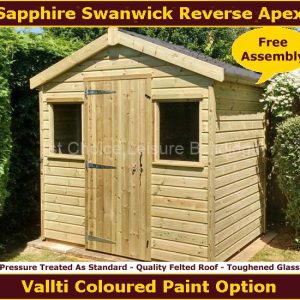 From £1449
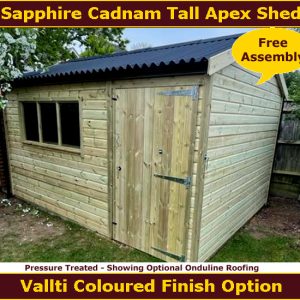 From £1449
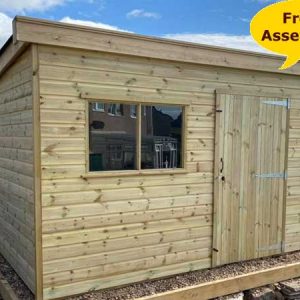 From £1449
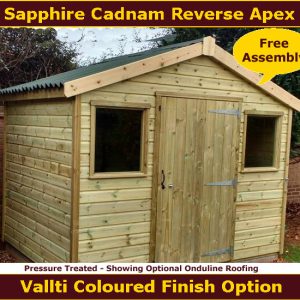 From £1449
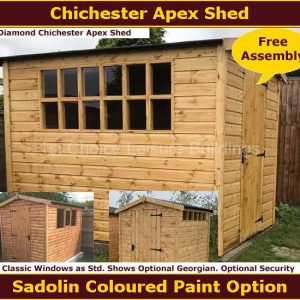 From £811
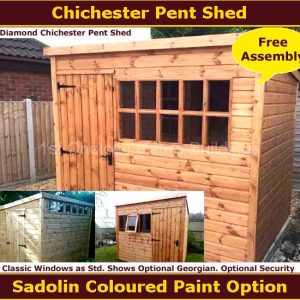 From £811
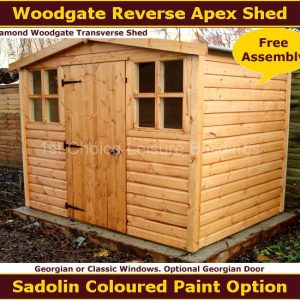 From £811
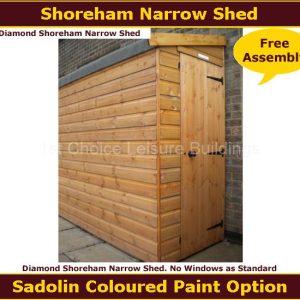 From £709
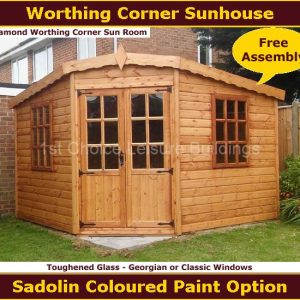 From £2260
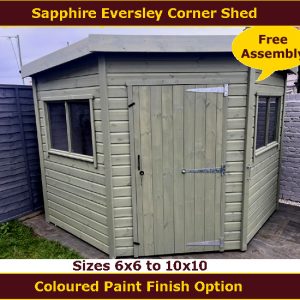 From £3249