Can You Claim Tax Relief on a Garden Office in the UK?
Published

I left school at 15 and, after gaining experience of working life, decided that I wanted to work for myself. In 1979 I started Marina Sheds, beginning what has become a lifetime of involvement with garden buildings.
Those early years gave me first-hand experience of the practical side of the industry. I learned about timber buildings from the point of view of manufacturing and selling them, but just as importantly I learned what customers actually expected from a garden building and the problems that could arise when the specification was not suitable for its intended use.
One lesson that has stayed with me is that you cannot reliably judge the quality of a garden building from a photograph. Two buildings can look very similar online while being quite different when you examine the timber, framing, floor, roof, doors, windows and overall construction.
I sold Marina Sheds in 1990. Unfortunately, I did not receive all the money that had been agreed as part of the sale, but that experience did not end my involvement with the garden building industry.
By 1992 the range of buildings I was involved with had expanded beyond traditional garden sheds to include summerhouses, garages, garden rooms and log cabins. With the business covering a much wider selection of buildings, the Titan Garden Buildings name was adopted.
My son Craig joined the business in 1992 after studying carpentry at Guildford College from 1990. His carpentry training complemented the practical manufacturing, retailing and business experience I had developed since 1979.
We continued developing Titan Garden Buildings until the business was sold in 1998.
In 2000 I decided to return to the garden building industry with a different approach. Instead of being tied to the products made by one manufacturer, I wanted to retail quality buildings from different suppliers and give customers the opportunity to compare them.
That idea led to the formation of 1st Choice Leisure Buildings.
I have always believed that having a choice is important. One manufacturer may make an excellent traditional shed while another may offer a better solution for a particular summerhouse, garden room or log cabin. Being able to consider products from different manufacturers means the starting point can be the customer's requirements rather than simply trying to sell whatever one factory happens to produce.
Today Craig runs the business on a day-to-day basis and I support him as required. I also continue to contribute the knowledge and experience I have accumulated from working with garden buildings since 1979.
Over the years I have been involved with many different types of outdoor buildings, including garden sheds, summerhouses, garden rooms and offices, garden workshops, garages and log cabins and garden cabins.
My particular interest is in the practical details that are easily overlooked when somebody starts shopping for a garden building. Timber thickness, framing, floor construction, roofing, doors, windows, glazing, treatment, insulation, bases and installation can all affect how suitable a building will be and how satisfied somebody is with it in the years ahead.
I try not to judge any garden building simply by its headline price. Price obviously matters, but value and price are not necessarily the same thing.
I look at what you are actually getting for your money. That includes the construction of the walls, the strength of the floor, roof materials, framing, doors, windows, glazing and the general standard of manufacture. I also consider whether those specifications are appropriate for what the customer intends to do with the building.
A straightforward shed being used to store a lawnmower, bicycles and garden tools does not need the same specification as a building somebody intends to use regularly as a home office, gym or hobby room.
Equally, buying the most expensive option is not automatically the right answer. If a simpler building meets your requirements properly, there may be little benefit in paying for specifications or features that you do not need.
My first piece of advice is to decide exactly what you want the building to do before becoming attached to a particular design. Think about how you will use it today, but also consider whether that use might change over the next few years.
Measure the available space carefully and remember that the nominal size of a building does not necessarily tell you everything about its usable internal space. Roof overhangs, verandas, door positions and the internal layout can all make a difference.
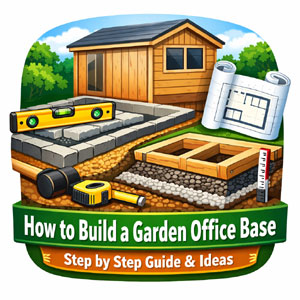
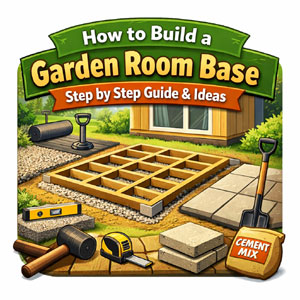
I would also pay close attention to the base. A good garden building installed on a poor or unsuitable base can lead to problems that have nothing to do with the quality of the building itself. The base needs to be firm, level and appropriate for the building being installed on it.
Finally, compare specifications rather than relying solely on photographs and prices. Look at what is included, what costs extra and whether the construction is appropriate for your intended use.
The internet has made comparing garden buildings much easier, but there are some things a screen cannot tell you.
You cannot properly feel the strength of a floor from a photograph. It is difficult to judge how substantial a door feels, how smoothly it operates, how much light enters through the windows or whether the internal space feels large enough for what you have planned.
This is why, whenever practical, I recommend seeing representative buildings before making a final decision. At our garden building display site, customers can inspect full-size buildings and compare construction, specifications and layouts for themselves.
Seeing different buildings side by side can also make it much easier to understand why apparently similar products can differ in price.
Log cabins have been part of my garden building experience since we expanded beyond traditional sheds in the early 1990s. They have developed enormously over the years and can now provide anything from an attractive summer retreat to substantial additional space for working, exercising, entertaining or pursuing a hobby.
When somebody asks me which log cabin they should buy, my starting point is not normally the style. I first want to know what they intend to use it for.
A cabin primarily intended for summer relaxation may have very different requirements from one that will be used regularly as a garden office, gym, studio or hobby room. As the intended use becomes more demanding, factors such as wall thickness, insulation, glazing, floor construction and overall specification become increasingly important.
I would also think about the future. If there is a realistic chance that a cabin initially intended for occasional leisure use will later become an office or regularly occupied room, choosing an appropriate specification at the outset may be more sensible than trying to upgrade it afterwards.
You can compare the different styles and specifications currently available in our range of log cabins, including traditional, contemporary, insulated and multi-room designs.
Wall thickness is one of the specifications customers often focus on when comparing cabins, but I would not choose solely on that figure. A 44mm cabin can be entirely suitable for many uses, while a thicker 70mm or insulated cabin may make more sense where comfort and more regular use are priorities.
If you expect to spend long periods inside during colder weather, I would consider the whole building rather than just the walls. Heat can also be lost through the roof, floor, doors and windows, which is why a properly designed insulated log cabin can be worth considering for more demanding uses.
Garden sheds may appear straightforward, but specifications vary considerably. I look particularly at the framing, cladding, floor and roof because these form the basic structure of the building.
I also consider how the shed will actually be used. A building intended for basic garden storage has different requirements from a workshop containing heavy equipment or somewhere a person expects to spend considerable time.
Doors are another practical consideration. Think about the largest item that will need to go through them. A shed can be perfectly well made but frustrating to use if the doorway is unsuitable for a lawnmower, motorcycle, mobility scooter or other large equipment.
With summerhouses and garden rooms, comfort and appearance usually become more important because people expect to spend time inside them rather than simply use them for storage.
I look at the amount of natural light, glazing, door position, usable floor area and how furniture will fit inside. A design that looks attractive from the garden still needs to work properly when you are sitting or working inside it.
If a building will be used regularly throughout more of the year, insulation, glazing and construction become increasingly important. Again, the correct specification depends on what you actually expect the building to do.
Whatever garden building you choose, its base is one of the most important parts of the project. It is also one of the areas where trying to save money can sometimes create unnecessary problems later.
A base should be firm and level and capable of supporting the building correctly. If it is uneven, the building can be difficult to assemble correctly and doors and windows may not operate as intended. Long-term movement or inadequate support can also affect the structure.
I therefore recommend considering the base at the same time as the building rather than treating it as an afterthought once the building has been ordered.
Garden buildings have changed considerably since I started Marina Sheds in 1979. Customers have more choice, buildings are available in far more styles and specifications, and the internet allows people to compare hundreds of options without leaving home.
What has not changed is the importance of matching the building to the job it needs to do.
There is rarely one garden building that is automatically right for everybody. The sensible choice depends on available space, intended use, budget, construction and how long you expect the building to meet your needs.
I have also learned not to judge quality from a photograph, a product name or a headline price. Sometimes a less expensive building is perfectly adequate. In other circumstances, paying more for stronger construction, thicker timber, better glazing or insulation can represent considerably better value over the life of the building.
After all these years, my advice remains fairly simple: understand what you need, look closely at what you are being offered and buy the specification that is right for the job.
Below you can find my latest articles and guides about garden buildings, including practical buying advice, construction, maintenance and answers to questions customers regularly ask. My aim is to use the experience I have gained since 1979 to help you make a better-informed choice for your own garden.