

Condensation in a Summerhouse: Keeping Windows Clear and Furniture Dry
You open the summerhouse after a few wet days and notice a musty smell. The cushions feel clammy, water has formed along the bottom of the windows, and the back of a chair has started to mark. Before reaching for a mould spray, look for the moisture source.
I’m Robin Antill, founder of 1st Choice Leisure Buildings. I’ve worked with garden buildings since 1979. With a summerhouse, I would pay particular attention to the glazing, the space behind furniture and what happens when the room is shut for several days.
A summerhouse used for sitting, reading or entertaining has different demands from a tool shed. People, drinks, plants and soft furnishings all need to be considered when keeping it dry.
Why Are the Windows Wet?
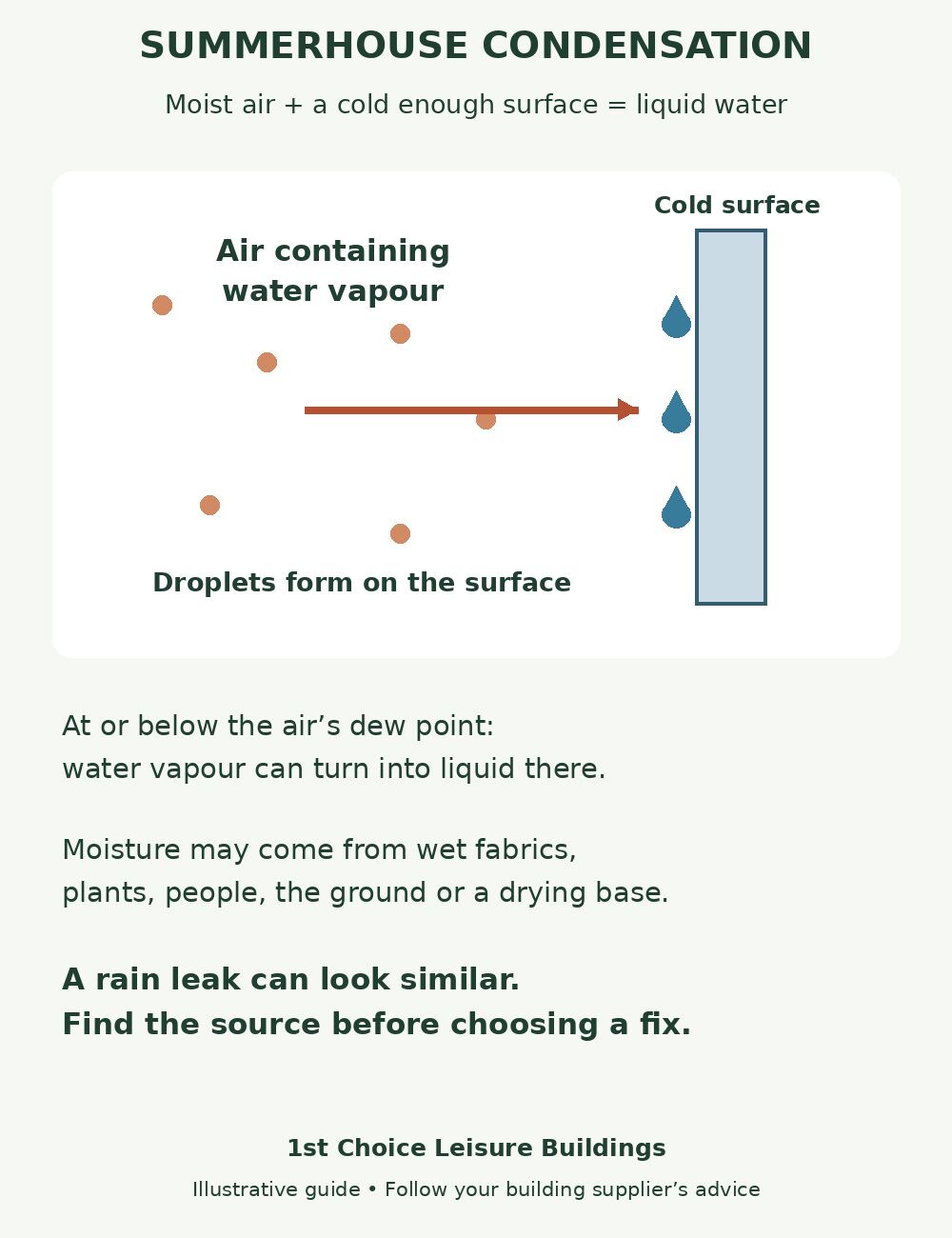
Water vapour turns into droplets when it meets a surface at or below its dew point. In a summerhouse, the glass is often one of the coldest surfaces, so that you may notice water there first.
Several people spending an evening inside add moisture through breathing. Wet coats, watered plants and a boiling kettle add more. If that moisture remains when the room cools, it can collect on the glazing and other cold surfaces.
It can happen in an unused building too. Warm, humid air entering a summerhouse with cold glass or furniture can leave condensation behind. Opening everything on a muggy day isn’t always a drying solution.
Look at Where the Water Appears
Use the pattern as a starting point. These clues can overlap, so check rather than assuming.
| What you notice | What to check |
|---|---|
| Droplets across the inside of several windows | Moisture indoors, cold glass and the ventilation available. |
| A wet patch beneath one window after rain | The glazing seals, frame joints and rainwater paths. |
| Damp cushions or marks behind a sofa | Whether fabrics were put away wet and whether furniture is pressed against a cold wall. |
| Water at the floor edge or lower walls | Puddles outside, splashback, gutter discharge and the base. |
A leak and condensation can occur together. If one patch keeps returning during rain, inspect that area before changing the ventilation.
Make a Few Changes Around the Seating
Pull sofas, cabinets and stored cushions away from the walls enough to let air move behind them and to give you access for inspection. Avoid leaving fabric against the glass. Check beneath rugs and behind seat pads, where damp can go unnoticed.
Bring rain-soaked cushions and wet clothing indoors to dry properly. Don’t seal damp fabrics in a storage box. If you keep plants in the summerhouse, empty standing water from trays and avoid leaving the floor wet after watering.
Wipe up water from window ledges rather than letting it sit against timber. This deals with the water already there; you still need to find out why it keeps returning.
Ventilate While You Use the Room
Open windows and use the building’s intended vents while people are inside. Air the room afterwards when conditions allow, particularly after visitors, wet weather or anything that has added moisture.
Before locking up, check that the background vents are clear. Closing every opening to keep the room warm can leave moisture with nowhere to go. Similarly, leaving a window exposed to driving rain is no substitute for properly detailed ventilation.
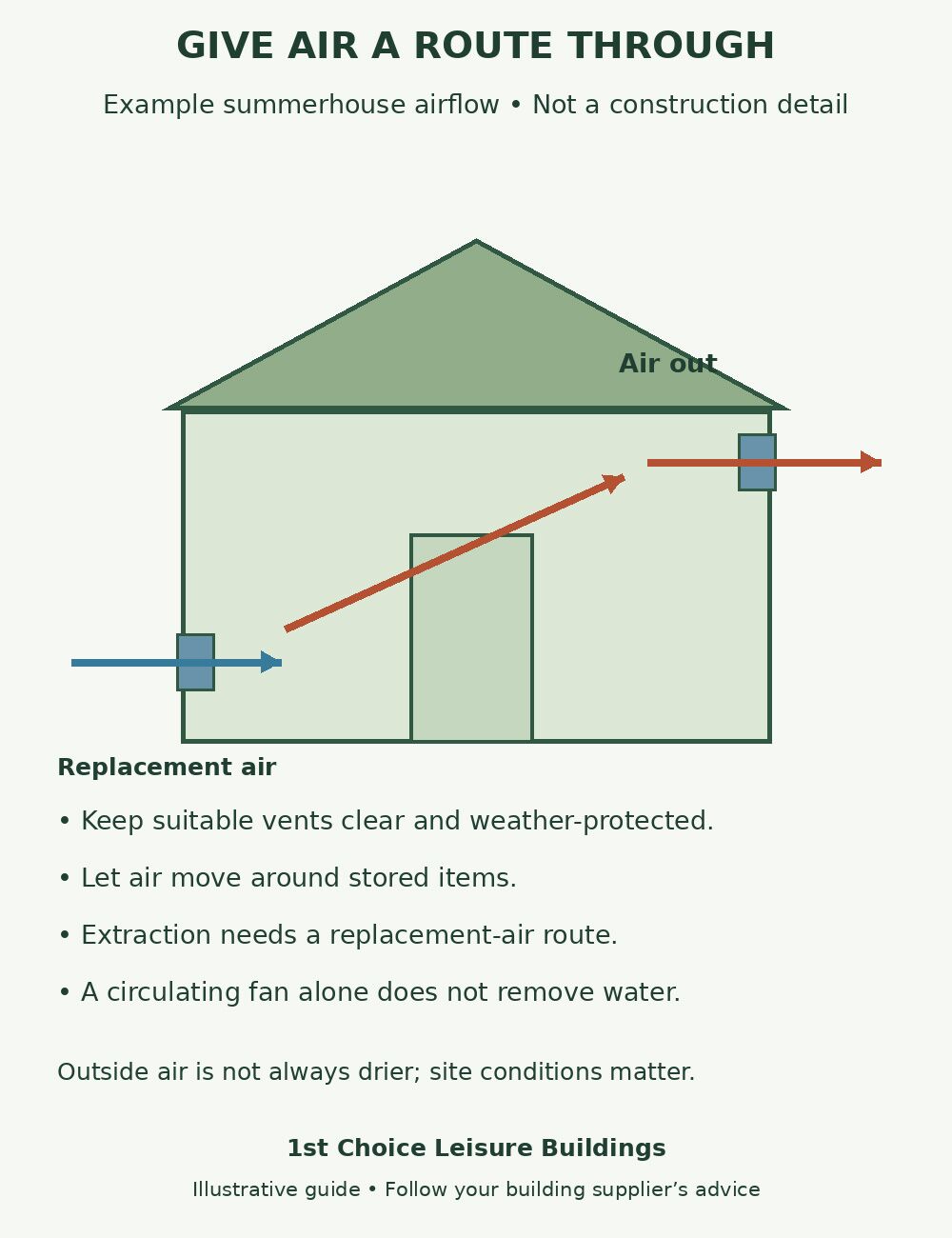
If the room has no suitable vents, ask the supplier what can be fitted. Opposing openings can help air travel through the space, but their size, position and weather protection should suit the building.
A desk or ceiling fan only moves the existing air. An extractor sends air outside and needs a route for replacement air. Have any powered installation properly specified and fitted.
If You Heat the Summerhouse
Heating can make the room comfortable and raise surface temperatures, but it does not remove moisture. If you warm the air for an evening and then seal up a damp room, condensation can return as it cools.
Keep ventilation in mind alongside heating. Use an appliance suited to the space and follow its instructions. Unflued bottled-gas and paraffin heaters add water vapour, so they are a poor choice for tackling damp. Never use a barbecue, camping stove or outdoor heater inside.
If you want regular use in colder weather, compare the complete construction of our insulated summerhouses: floor, walls, roof, windows and doors. Insulation can help keep surfaces warmer in a heated room. It will not keep an unheated room warm indefinitely.
For an existing building, get advice before adding insulation or lining. The roof, membranes, vapour control and ventilation must work together. Covering damp timber can hide a problem instead of solving it.
Will a Dehumidifier Help?
It may help in a reasonably enclosed summerhouse with a safe electrical supply. Choose a model whose operating-temperature range suits the room, and follow its drainage and placement instructions.
Running it with windows wide open can mean continually treating outside air. Follow the appliance guidance while keeping any ventilation required for occupants or appliances. Remember that a dehumidifier supplies no fresh air.
Small moisture-absorbing tubs have limited capacity. They may be useful in a cupboard, but you shouldn’t rely on them to protect a whole summerhouse from a leak or ongoing moisture problem.
Before Leaving It Unused Through Winter
- Clean and dry cushions, curtains and rugs. Move vulnerable items to a suitable dry space if the summerhouse cannot keep them in good condition.
- Leave room behind furniture and keep intended ventilation openings clear.
- Clear gutters and check roof edges, glazing and door seals.
- Remove leaves, soil and stored items from against the lower timber.
- Check that water drains away from the base and that any designed underfloor ventilation remains open.
- Visit during cold or wet weather rather than leaving the room unchecked until spring.
A new base or new building may still be drying. Follow the supplier’s instructions and also check for leaks. Do not wrap damp floor timbers in plastic or add a membrane to an existing floor without understanding how that construction should dry.
If You Find Mould
Deal with the moisture as well as the visible growth. Mould is a fungus, and a spray alone will not stop it returning if the surface stays damp.
For a small area, use a cleaning method suited to the material and follow the instructions. Do not dry-brush mould or mix cleaning chemicals. Extensive or recurring growth, affected upholstery or soft structural timber needs proper assessment. Mould exposure can affect health, particularly for people with asthma or allergies.
Contact the seller if you think the building has a fault. Keep photographs and records of installation and maintenance. Condensation does not automatically prove poor care or automatically cancel a guarantee.
What I Would Check First
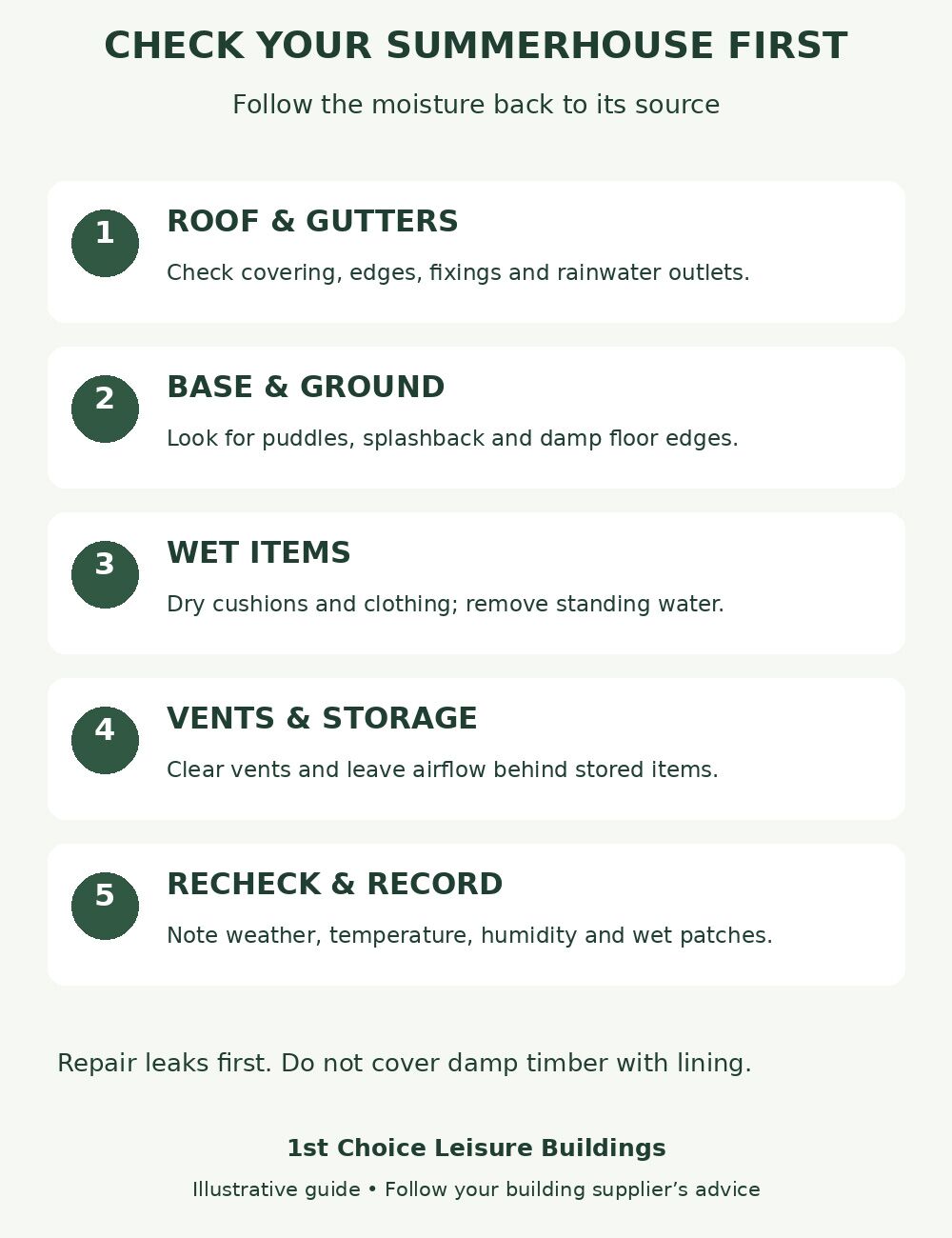
I would start at the wettest place and work outwards: the glass and frame, the wall behind the furniture, then the roof and ground outside. Note whether the water appears after rain, after using the room, or during a cold spell.
A thermometer and hygrometer can help you spot a pattern, but one humidity reading will not diagnose the problem. The temperature of the surfaces matters too.
Once you know the cause, you can decide whether you need a repair, a change in storage, better ventilation or help with the building’s construction. For weather protection, see our garden building weatherproofing guide.
Robin Antill
Founder, 1st Choice Leisure Buildings
Working with garden buildings since 1979
Reviewed: 26 October 2026. Follow the instructions for your particular building and equipment. Get advice before changing structural parts, roof details or electrical installations.


