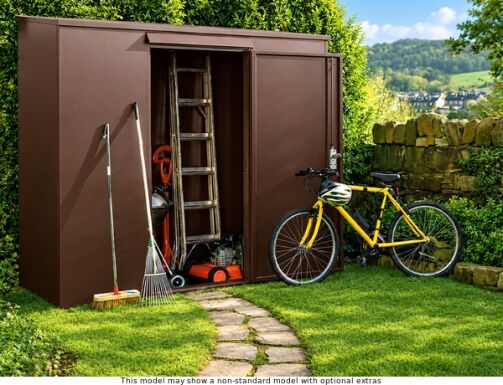
Which Tool Shed Should I Choose?
The best tool shed depends on whether your priority is value, bespoke timber construction, insulation and comfort, or maximum security. Diamond provides a flexible and economical timber shed; Sapphire steps up the timber specification with pressure-treated construction and insulation options; Platinum is suited to customers wanting a larger or higher-specification timber building; while GardenVault metal storage is worth considering when security and low-maintenance storage are the main priorities.
| Feature | Diamond | Sapphire | Platinum | Asgard |
| Best for | Everyday tools, garden equipment and flexible storage | Higher-specification timber storage and hobby use | Premium timber storage, hobbies and more regular use | Security-focused tool and equipment storage |
| Construction | Quality timber construction | Pressure-treated timber options | Higher-specification pressure-treated timber options | Metal construction |
| Bespoke flexibility | Excellent | Good | Excellent on appropriate models | More focused on predetermined storage designs |
| Insulation | Not normally the main reason to choose the range | Full insulation option on selected buildings | Full insulation options on selected buildings | Not intended as an insulated timber room |
| Natural light | Toughened-glass window options | Toughened-glass window options | Toughened-glass window options | Security is normally prioritised over glazing |
| Appearance | Traditional or contemporary timber shed | Higher-specification timber shed | Premium garden-building appearance | Functional metal security storage |
| Best reason to choose it | Value and bespoke flexibility | Pressure-treated timber and insulation options | Higher specification and greater multi-purpose potential | Secure, practical and low-maintenance storage |
Specifications and options vary between individual buildings. Compare the specific model before ordering, especially if insulation, bespoke alterations, or specialist security are important.
Which Tool Shed Might Be Right for You?
Choose Diamond for Flexible, Good-Value Tool Storage
A Diamond shed is a strong starting point if you need somewhere practical for garden tools, lawnmowers, DIY equipment, bicycles and general garden storage but still want the appearance and flexibility of a quality timber building.
Diamond is particularly useful when a standard shed does not quite fit your garden. Depending on the model, you can choose from a wide range of sizes and alter features such as doors and windows to make the available space work more effectively.
Diamond might be right for you if:
- You want good-quality timber tool storage at a competitive price.
- You need a bespoke or unusual shed size.
- You want flexibility over doors and windows.
- You need space for a mower, gardening equipment or DIY tools.
- You prefer a traditional timber shed to a metal store.
- Insulation is not your main priority.
Why choose Diamond? It offers a particularly useful balance of price, timber construction and bespoke flexibility. If the shed's main job is storing equipment rather than providing a regularly occupied room, Diamond may give you everything you need without paying for a higher specification.
Choose Sapphire for a Step Up in Timber Specification
Sapphire is worth considering when you still want the appearance and practicality of a timber tool shed but would benefit from a higher specification and additional options.
Selected Sapphire buildings are available with pressure-treated construction and full insulation options, making the range particularly useful where the shed may sometimes be used for hobbies, DIY or other activities as well as straightforward storage.
Sapphire might be right for you if:
- You want pressure-treated timber construction.
- You want a higher specification than a straightforward storage shed.
- You may spend time working inside the building.
- You want an insulation option.
- You want natural light from toughened-glass windows.
- You still prefer the appearance of a traditional timber garden building.
Why choose Sapphire? It bridges the gap between straightforward timber storage and a more highly specified garden building. It is particularly attractive if you want your tool shed to double as occasional hobby or working space.
Choose Platinum for a Higher-Specification Multi-Purpose Building
Platinum becomes particularly relevant when the building needs to do more than simply store tools. The range includes larger pressure-treated buildings and models with full insulation options, allowing the same structure to accommodate equipment, workbenches, hobbies and more regular use.
If you have expensive tools or machinery, you may also appreciate having enough space to organise equipment properly rather than simply stacking everything into the smallest possible shed.
Platinum might be right for you if:
- You want a higher-specification timber building.
- You require a larger tool store or combined workshop and storage area.
- You expect to spend significant periods inside.
- You want pressure-treated construction.
- You want the option of full insulation.
- You need a building that could serve several purposes over its lifetime.
Why choose Platinum? It makes most sense when your requirement is beginning to move beyond a conventional tool shed. If you need storage today but can see the building becoming a workshop, hobby room or more regularly used space later, investing in the higher specification can be worthwhile.
Choose Asgard When Security Is the Main Priority
Asgard takes a different approach from the Diamond, Sapphire and Platinum timber ranges. Rather than prioritising bespoke timber styling, natural light or insulation, a metal security shed is primarily about providing robust, practical storage for valuable equipment.
This can make a secure metal tool shed particularly relevant for power tools, bicycles, gardening machinery and other equipment where theft resistance and low-maintenance construction matter more than creating a comfortable room to spend time in.
Asgard might be right for you if:
- Security is your first consideration.
- You are storing valuable power tools or equipment.
- You prefer metal construction.
- You want a low-maintenance storage solution.
- You do not need a timber garden-building appearance.
- You do not intend to use the building as an insulated hobby room or workshop.
Why choose Asgard? If the building has one primary job — protecting valuable tools and equipment — a purpose-designed metal security store can make more sense than paying for windows, insulation, timber finishes or bespoke features you do not need.
Quick Tool Shed Recommendation
| Your Main Priority | Start With |
| Good-value timber tool storage | Diamond |
| Bespoke size or layout | Diamond |
| Pressure-treated timber construction | Sapphire or Platinum |
| Occasional hobby or DIY space as well as storage | Sapphire |
| Larger multi-purpose timber building | Platinum |
| Full insulation option | Sapphire or Platinum |
| Maximum emphasis on tool security | Asgard GardenVault |
| Low-maintenance metal storage | Asgard GardenVault |
Timber or Metal Tool Shed?
One of the most useful decisions to make first is whether you want a timber garden building or a security-focused metal store. If appearance, natural light, bespoke dimensions, insulation or spending time inside matter, start by comparing Diamond, Sapphire and Platinum. If the building is primarily somewhere to lock away valuable tools and equipment, a secure metal shed may be the more appropriate solution.
There is no single best tool shed for every customer. The right choice depends on what you are storing, how valuable it is, how often you will spend time inside the building, the space available in your garden and how much flexibility you need over the design.
Explore our tool sheds or compare our bespoke timber sheds to find the specification that best matches how you intend to use your building.
Choosing the Right Tool Shed for Your Garden
A good tool shed should do more than hide garden equipment. It should give you dry, practical and accessible storage for the things you regularly use, with enough room to organise tools properly rather than piling everything inside the doorway. After many years around garden buildings, our advice is to choose a tool shed by what has to go inside it, how often you need access and what you may want to store in two or three years.
Our tool shed range includes compact storage for hand tools as well as larger buildings capable of accommodating lawnmowers, strimmers, wheelbarrows, power tools, garden furniture and other bulky equipment. Depending on the model, you can choose timber or galvanised steel construction, different door arrangements and useful storage options such as shelving, hooks and tool rails.
If you are comparing several types of garden building, start with the purpose. This page is specifically for customers looking for practical storage for tools and garden equipment. For a broader choice of buildings, see our complete shed collection.
What Should You Look for in a Garden Tool Shed?
The best tool shed is not necessarily the biggest or the cheapest. It is the building that gives you the right combination of usable floor area, doorway access, construction quality, security and convenient internal storage.
1. Start With What You Need to Store
Make a quick list before choosing the shed. Hand tools, watering cans and gardening products need comparatively little floor space and are normally better kept on shelves or wall-mounted storage. A lawnmower, wheelbarrow, shredder or pressure washer requires clear floor area and sufficient door width. Long-handled tools such as spades, forks, rakes and strimmers also need enough internal height to be stored conveniently.
Allow spare capacity rather than calculating the dimensions around what you own today. Garden equipment has a habit of accumulating, and a shed that is full on the day it is installed can quickly become awkward to use.
2. Check the Door Opening, Not Just the Shed Size
One of the most frequently overlooked measurements is the actual door opening. If you are storing a lawnmower, wheelbarrow or other wide equipment, check that it can comfortably pass through the doorway. Double doors can make a significant difference where larger machinery has to be moved in and out regularly.
3. Think About Shelving and Vertical Storage
A well-organised tool store makes far better use of its footprint than an empty box. Shelving can keep smaller equipment, plant food, pots and accessories off the floor, while rails and hooks are useful for long-handled tools. Keeping a clear central floor area also makes it easier to reach equipment at the back without emptying half the shed first.
4. Consider Security Before Filling the Shed
Think about what your tools would cost to replace rather than simply what the shed costs to buy. Good doors, suitable locks, secure hinges and a solid installation are particularly important where expensive power tools or garden machinery will be stored. Steel storage models may also offer features designed specifically around secure equipment storage.
5. Choose a Suitable Base
Even an excellent shed performs poorly when installed on an unsuitable foundation. The base should be firm, level and suitable for the particular building being installed. Getting the base right helps the doors operate correctly and gives the structure the support it was designed to have. If you are unsure what your chosen building requires, ask before preparing the site rather than trying to correct an unsuitable base on installation day.
Tool Shed Comparison: Which Type Is Best for You?
| Requirement | What to Consider | Typically Suitable For |
| Hand tools and gardening accessories | Good shelving, hooks and easy access matter more than a large empty floor | Compact tool storage |
| Lawnmower and garden machinery | Check floor space, door width and manoeuvring room | Medium or larger tool shed |
| Long-handled tools | Useful wall height and tool rails help keep equipment organised | Most full-height storage buildings |
| Valuable power tools | Prioritise door construction, locking arrangements and overall security | Secure timber or steel storage |
| Narrow side passage or restricted garden | Measure available width, door swing and access route carefully | Compact or narrow-format building |
| Large collection of garden equipment | Allow additional capacity and separate floor storage from shelving | Larger multi-purpose storage building |
Timber or Steel for Tool Storage?
Both materials can make effective tool storage, but the right choice depends on your priorities. A timber building has the traditional garden appearance many customers prefer and can offer considerable flexibility in dimensions, doors, windows and other specifications. If your preference is specifically for timber construction, our timber shed range explains those options in more detail.
Galvanised steel storage can be particularly useful where security, compact dimensions and comparatively low routine maintenance are priorities. Some steel products are designed specifically for storing valuable equipment and can include optional rails and shelving. Customers concentrating primarily on steel construction can compare the dedicated steel storage range.
Neither material is automatically right for everybody. We would choose according to the equipment being stored, the position in the garden, preferred appearance, access requirements, security expectations and how you want to organise the interior.
How Big Should a Tool Shed Be?
Measure the equipment rather than guessing from a familiar shed size. Put the lawnmower, wheelbarrow and largest items together on the ground if possible and measure the area they actually occupy. Then allow space for shelves, long-handled tools, opening doors and a route into the building.
For a small collection of hand tools and gardening supplies, a compact building may be sufficient. If space is particularly restricted, see our compact shed options. Once lawnmowers, wheelbarrows, machinery or several large items are involved, extra floor area quickly becomes worthwhile.
The most useful measurement is not simply external width multiplied by external depth. Think about usable internal dimensions, door position and whether your equipment can be removed without moving several other items first.
A Practical Tool Shed Layout
We normally recommend dividing the interior into three storage zones. Keep regularly used equipment near the entrance, large machines and heavy items at floor level, and smaller items on shelving. Long-handled tools can be stored vertically on suitable hooks or rails. This leaves a clear route through the building and reduces the temptation to lean everything against the doors.
If possible, avoid covering every wall with floor-standing equipment. Vertical storage is one of the simplest ways to increase the practical capacity of a garden tool shed without buying a much larger building.
Common Mistakes When Buying a Tool Shed
Buying Only for Today’s Equipment
A shed with no spare capacity quickly becomes overcrowded. Allow room for the extra mower attachment, new power tool, garden chairs or equipment you have not bought yet.
Ignoring the Door Width
Customers often check the overall shed dimensions but forget the doorway. Measure your widest piece of equipment and make sure it can enter comfortably, particularly if it is heavy or awkward to manoeuvre.
Choosing on Price Alone
Two buildings of apparently similar dimensions can differ considerably in construction, materials, doors, floor, roof, treatment, security and installation requirements. Compare what is actually included rather than comparing only the headline price.
Forgetting About Internal Organisation
A larger disorganised shed can sometimes hold less useful equipment than a smaller shed with sensible shelving and wall storage. Decide where hand tools, machinery and long-handled equipment will go before ordering accessories.
Preparing the Base Too Late
Find out the base requirements before delivery. A firm and level foundation is an important part of a successful installation, and correcting the site after a building arrives is considerably less convenient.
Not Checking Garden Access
Remember that the building components have to reach the installation position. Check side gates, passages, steps, narrow corners and any route through the house before ordering. If access is unusual, discuss it with us beforehand.
Assuming Every Shed Needs Windows
Windows are handy if you want some natural light in the shed, but they’re not always necessary. If you’re mainly using it to store tools, machinery or other valuable equipment, fewer windows can actually be the better choice. It gives you more privacy, keeps what’s inside out of sight and can make the shed less tempting to unwanted visitors.
Tool Storage for Lawnmowers and Larger Garden Equipment
Lawnmowers are among the items most likely to expose a poorly planned shed. Check not only the mower’s width but also its length with the handle positioned as it will actually be stored. Petrol mowers, electric mowers, pressure washers, shredders and similar machines are generally best stored at floor level where they can be moved without lifting.
Leave a practical route from the doors to the machinery you use most often. There is little benefit in having enough theoretical floor area if retrieving the lawnmower requires moving bicycles, garden furniture and boxes every weekend.
Tool Shed Security: What Matters?
No garden building can make sensible security precautions unnecessary. Start by considering the value and portability of what will be kept inside. Good-quality doors and locking arrangements are important, and expensive equipment should not be unnecessarily visible from outside. For higher-value storage requirements, look carefully at the individual product specification and available security features rather than assuming every shed offers the same level of protection.
If bicycles form a major part of what you intend to store, a building designed around cycle security may be a better fit; you can compare our dedicated cycle storage options. Likewise, customers storing a motorcycle should look at the purpose-specific motorcycle storage range rather than choosing solely on floor dimensions.
Treatment, Maintenance and Keeping Tools Dry
The amount of maintenance required depends on the construction and finish you choose. Timber buildings should be looked after in accordance with the treatment and finish supplied, while galvanised steel models have different care requirements. Good site preparation and keeping the area around the building clear can also help the shed perform as intended.
If long-term timber protection is one of your main priorities, you can read more about our treated timber building options. That is a specialist subject in its own right, so we have not duplicated the detailed treatment information on this tool-storage page.
Why Buy Your Tool Shed From 1st Choice Leisure Buildings?
Buying a garden building from photographs alone can make it difficult to judge construction quality. Customers should understand what they are buying, which is why specifications, available options and installation arrangements are explained on the individual product pages and why customers can also see examples of our garden buildings at our Surrey display site.
Our range includes both timber and steel options, so we can help you consider the building around the equipment you actually need to store rather than trying to make one type of shed suit everybody. Depending on the chosen product and delivery area, professional assembly may be included or available as an option.
Before placing your order, please have a quick look at our current delivery times and areas, as these do vary depending on the building and where you live. It’s also worth taking a look at what our customers have to say about their experience with us.
Tool Shed Buying Checklist
- List everything that needs to be stored now.
- Allow spare room for future tools and equipment.
- Measure your largest item, including the lawnmower or wheelbarrow.
- Check the usable door opening.
- Decide where shelving, hooks and tool rails will go.
- Consider the replacement value of the equipment when assessing security.
- Measure the garden position as well as the shed.
- Check the access route from the road to the installation position.
- Confirm the correct base requirements before delivery.
- Check whether installation is included or available for your chosen model.
- Check current delivery availability for your postcode.
Frequently Asked Questions About Tool Sheds
What is the best shed for storing garden tools?
The best shed for garden tools is one with enough floor space for your largest equipment, suitable wall or shelf storage for smaller tools, convenient door access and security appropriate to the value of what you are storing. Timber and galvanised steel buildings can both work well; the better choice depends on your garden, storage requirements and preferred specification.
What size tool shed do I need?
Start by measuring your largest equipment and the total floor area occupied by your mower, wheelbarrow and other bulky items. Then add space for shelving and a clear route through the shed. A building should have spare capacity rather than being full from the first day.
Can I store a lawnmower in a tool shed?
Yes, most tool sheds are perfectly suitable for storing a lawnmower. The main things to check are that you’ve got enough floor space and, importantly, that the door is wide enough to get the mower in and out comfortably. It’s worth measuring the mower first, including the handle if it doesn’t fold down. I’d also allow a little extra room around it, rather than choosing a shed where the mower only fits.
Are timber or steel tool sheds better?
Neither is automatically better. Timber provides a traditional appearance and can offer considerable choice in dimensions and configuration. Galvanised steel can be an excellent choice where security, compact storage or lower routine maintenance are important. Compare the specification of the individual building against what you intend to store.
Should a tool shed have windows?
Windows provide useful daylight when you spend time finding or organising equipment, but a storage-only shed does not necessarily need them. Customers storing higher-value tools may prefer fewer windows or a layout that reduces visibility into the building.
Do I need shelves in a tool shed?
Shelves are not essential, but they make a considerable difference to usable storage. Smaller tools, pots and gardening products can be moved off the floor, leaving valuable floor area available for lawnmowers, wheelbarrows and other heavy equipment.
How can I organise long-handled garden tools?
Spades, forks, rakes, hoes and similar long-handled equipment are usually best stored vertically using suitable wall hooks or a tool rail. This keeps them accessible while using far less floor area than leaning them around the sides of the shed.
How secure is a garden tool shed?
Security varies between products and should be assessed from the individual specification. Consider the doors, hinges, locking arrangements, construction and whether valuable equipment is visible from outside. The greater the replacement value of your tools, the more attention you should give to security.
What base does a tool shed need?
The correct foundation depends on the building you select, but it should normally provide the firm and level support specified for that model. Confirm the base requirements before preparing the site because an unsuitable or uneven foundation can cause avoidable installation and operational problems.
Can a tool shed be fitted in a narrow garden?
Often, yes. Measure the proposed position carefully and remember to account for doors, roof overhangs and access around the building where required. Also check the delivery route to the garden. Where space is restricted, a narrower storage design may make better use of the available area.
Can I customise a tool shed?
Customisation depends on the individual range. Some timber buildings offer choices such as different dimensions, door positions, windows, finishes and internal options, while steel storage products may offer shelving, rails or other accessories. Check each product page for the options available on that particular model.
Is installation included with a tool shed?
Installation arrangements vary by range. Most of our timber buildings include free professional fitting subject to the applicable delivery conditions, while other products may have assembly available as an option. Check the individual product information and our current delivery details before ordering.
How long will my tool shed take to arrive?
Delivery times can vary depending on the shed you choose, any optional extras, where you live and how busy the workshop is. As lead times do change throughout the year, it’s best to check our current delivery information for the latest timescales.
Need Help Choosing?
If you are unsure which tool shed will work best, make a note of your available space and the largest items you need to store before contacting us. Those two pieces of information make it much easier to narrow the choice. You can then compare the products above by size, material, doors, security, storage options and installation arrangements rather than simply choosing the first shed that appears large enough.
A well-chosen tool shed should make gardening easier for years, not merely provide somewhere to put things on delivery day. Give yourself enough space, get the base right and choose the specification around the equipment you genuinely use.