10×8 Sheds – A Versatile Size for Storage, DIY and Hobbies
A 10×8 shed is one of the most useful garden shed sizes because it provides around 80 square feet of nominal floor area without requiring the space of a much larger workshop. A 10ft x 8ft shed gives you room for garden machinery, bicycles, tools and shelving, while still leaving enough space for a bench or hobby area if the interior is planned carefully.
There are currently 21 timber buildings displayed on this page from our Diamond, Sapphire and Platinum ranges. They include traditional apex and pent sheds, reverse apex and transverse designs, Dutch barn styles and buildings with insulation or other practical options. I would therefore choose based on how you intend to use your shed, rather than assuming every 8×10 shed offers the same specification.
Which 10×8 Shed Should I Choose?
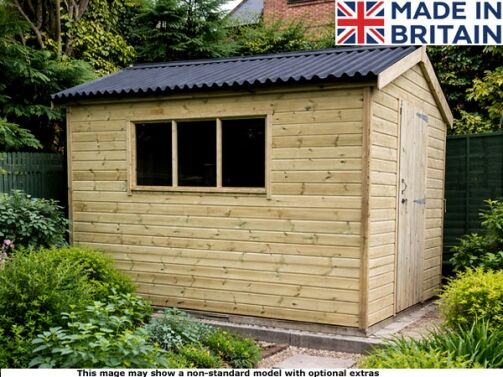
If straightforward garden storage, flexibility and a good choice of layouts are your priorities, start by comparing the Diamond buildings. The products on this page include the Diamond Chichester Apex, Chichester Pent, Woodgate Reverse Apex and Diamond Barnham Apex and Pent. The Chichester, for example, offers different door and window arrangements, paint options and bespoke possibilities, with professional installation included within the relevant delivery area.
The Diamond selection also includes the Ditchling Dutch Barn and Durrington Dutch Barn. Their barn-style roofs give them a noticeably different appearance from a conventional apex shed, making them worth considering if that design suits your garden and storage requirements.
The Sapphire products displayed here include Swanwick and Cadnam models in apex, pent and reverse apex layouts. The Sapphire Swanwick Apex, for example, uses pressure-treated timber and offers painted and full-insulation options. If you expect to spend regular periods inside your 10×8 shed for hobbies or DIY, those options may be worth comparing.
The Platinum choices include Fareham Apex, Pent and Reverse Apex, Portsmouth Apex, the Platinum Alresford, and Southampton Apex, Pent and Transverse models. Selected buildings offer insulation and painted finishes, while the Alresford has practical features, including a bench and shelf. I would compare the individual specifications carefully because these buildings are not simply different-looking versions of the same shed.
What Is a 10×8 Shed Good For?
A 10×8 shed is large enough for organised storage rather than simply somewhere to put a lawnmower and a few tools. Bicycles, gardening equipment, furniture and machinery can be arranged around the walls, leaving useful central floor space. You can also add a workbench and shelving if you want space for DIY or hobbies.
Before ordering, measure your largest items and decide where they will go. Think about the route from the door to the back of the building and where shelving or a bench would work best. An 80-square-foot shed gives you useful space, but good planning makes a substantial difference to how usable it feels once everything is inside.
Is a 10×8 Shed Big Enough for a Workshop?
For many people, yes. A 10ft x 8ft shed can provide enough room for a workbench, tools, and storage while still leaving space to work. Whether it is right for you depends on the equipment you use and how much clear floor area you need, so mark out 10ft x 8ft at home before ordering if you are unsure.
If you expect to spend longer periods inside, compare the Sapphire and Platinum buildings, which offer full-insulation options. Insulation may improve comfort for regular hobby or DIY use, but if you need garden storage, there may be little benefit in paying for an option you do not need.
Which Roof Style Is Best for a 10×8 Shed?
There is no single best roof style. An apex gives you the traditional central ridge, while a pent roof slopes in one direction. Reverse apex and transverse models change the orientation of the main elevation and entrance, which can be useful if you want to enter from the 10ft side rather than the 8ft end. The Ditchling and Durrington add Dutch barn designs as another option on this page.
I recommend deciding where your building will stand and how you will approach it before choosing. Door position strongly influences how easily you can organise the interior, particularly when you are adding shelves, machinery, or a workbench.
Can a 10×8 Shed Be Insulated?
Yes. Full-insulation options are available on selected Sapphire and Platinum buildings displayed on this page, including models within the Swanwick, Cadnam, Fareham, Portsmouth and Southampton ranges. Check the individual product specification, as available options vary between buildings.
For regular hobbies or DIY, insulation can be useful. For straightforward tool, bicycle, and garden equipment storage, I would focus first on construction, access, and layout. My advice has always been to pay for features you need, not simply because they appear on an options list.
Are These 10×8 Sheds Fitted for You?
Free fitting or assembly is included with the relevant timber buildings shown here, subject to the applicable delivery area, suitable site access and the correct base being ready. The Diamond Chichester, for example, includes free on-site installation within its stated delivery conditions.
You will still need to provide a firm, level base suitable for your chosen building. Remember to note that garden building sizes are nominal, so use the exact measurements on the individual product page when preparing the base rather than relying solely on the description 8×10 shed.
What Should You Look for Before Buying a 10×8 Shed?
I would look beyond the photograph and headline price. Compare the timber, cladding, framing, floor, roof, doors and glazing, as well as the options which are actually useful to you. On the Diamond Chichester, for example, the specification includes substantial timber framing, tongue-and-groove construction, toughened glass and a choice of door and window arrangements.
Two buildings can both be described as a 10×8 shed but feel quite different when you stand inside them. Height, door position, windows and internal layout matter just as much as the nominal footprint, particularly if you plan to use the shed regularly rather than simply store equipment inside it.
I Have Been Involved With Sheds Since 1979
I’m Robin Antill, founder of 1st Choice Leisure Buildings. I left school at 15 and started in business in 1979 trading as Marina Sheds. Those early years were very hands-on and gave me practical experience in garden buildings, timber construction, and dealing directly with customers who needed advice on what would work in their gardens.
I sold Marina Sheds in 1990, although unfortunately I did not receive all the money which was due to me from the sale. I stayed in the garden building industry and in 1992 we expanded into summerhouses, garages, garden rooms and log cabins. As the business had moved well beyond sheds, that change of direction led to the name Titan Garden Buildings.
My son Craig joined me in 1992 after studying carpentry at Guildford College from 1990. His carpentry training added further practical knowledge of timber and construction to the business. We sold Titan Garden Buildings in 1998 and in 2000 decided to retail quality buildings from selected manufacturers rather than being tied to products from one source. That decision led to the formation of 1st Choice Leisure Buildings.
Craig now runs the day-to-day business, and I remain involved to support him and the team as required. You can read more about our history on our About 1st Choice Leisure Buildings page.
Why Does My Experience Matter When Choosing a Shed?
Having worked with sheds and garden buildings since 1979, I have seen a huge range of products and specifications. What I have learnt is that there is no point in automatically recommending the most expensive building. The right shed is the one whose construction, layout and options suit what you actually want to do with it.
If you mainly need garden storage, one of the Diamond buildings may provide everything required. If pressure-treated timber and insulation options are important, compare the Sapphire models. The Platinum Fareham, Portsmouth, Alresford and Southampton products provide further alternatives where their individual features suit your intended use. My job is to help you understand those differences rather than tell you that one range is best for everybody.
Can I See a 12×6 Shed Before Buying?
Whenever practical, I recommend seeing garden buildings before buying. We cannot display every model in every possible size, but you can visit our Surrey garden building display site near Guildford, Woking and Ripley to inspect representative buildings and compare construction, floors, doors, windows and finishes for yourself.
Photographs are useful, but they cannot fully show you how substantial a floor feels underfoot or how a door operates. I started selling sheds in 1979 and still believe that seeing the product and understanding its specification are two of the best ways to make a good buying decision.
How Do I Choose the Best 10ft x 8ft Shed?
Start by deciding what you actually need the building to do. Work out what you will store, whether you need a workbench, how often you expect to spend time inside and which direction the entrance needs to face. Then compare the actual products on this page which meet those requirements.
Whichever 10ft x 8ft shed you choose, check the precise dimensions, door and window positions, available options, base requirements and delivery access before ordering. If you want to compare this footprint with other sizes, visit our garden sheds by size section.
If you are unsure which 8×10 shed is right for you, please ask us. Between Craig, me, and the team, we have a great deal of practical garden-building experience. I would much rather help you choose the right building at the start than see you pay for options you don’t need or discover later that another layout would have suited you better.


 From £1449
