View More Garden Room Images
Click on images below to see larger versions of garden rooms
Click on images below to see larger versions of garden rooms and offices
Click on images below to see larger versions of painted garden rooms
Click on image below to see larger versions of painted garden rooms
Royal vs Platinum Garden Rooms – Which Should You Choose?
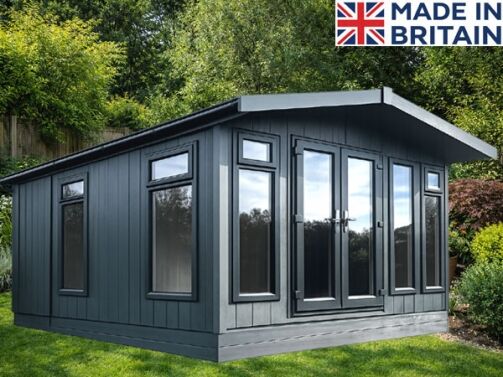
Our Royal and Platinum garden rooms both provide well-specified, insulated space for home working, hobbies and leisure use, but there are some important differences. Platinum Fleet and Odiham offer excellent value if you want an insulated, double-glazed garden room without moving to our premium specification. Royal goes further, with insulation to the walls, floor and roof, 28mm residential-style PVCu double glazing, larger size options and a higher overall specification.
| Feature | Royal Garden Rooms | Platinum Fleet / Odiham |
| Best suited to | Premium home offices, studios and garden rooms for frequent year-round use | Home offices, hobby rooms and leisure spaces where comfort and value are both important |
| Insulation | Walls, floor and roof fully insulated as standard | Walls and roof insulated as standard |
| Double glazing | 28mm residential-quality sealed units | 14mm double glazing |
| Doors and windows | Residential-style PVCu double-glazed doors and windows as standard | Double-glazed timber doors and windows as standard, with PVCu upgrades available on selected specifications |
| External cladding | Painted LP® StrongCore™ engineered cladding or pressure-treated timber options | Pressure-treated T&G shiplap or loglap timber options |
| Wall framing | Approx. 85mm × 34mm finished joinery-grade framework | Approx. 70mm × 34mm finished pressure-treated framework |
| Internal finish | Choice of T&G lining or white MDF lining depending on specification | Ply lining as standard, with T&G matchboard upgrade available |
| Floor | Heavy-duty timber floor with insulated construction; laminate flooring option available | Pressure-treated T&G timber floor |
| Roof covering | EPDM rubber roofing on pent models; alternative finishes depending on roof style | Heavy-duty roofing felt as standard, with alternative coverings available on selected models |
| Apex and pent options | Yes | Yes – Fleet is apex and Odiham is pent |
| Bespoke options | Extensive choice of sizes, doors, windows and layouts | Flexible door and window positions with bespoke options available |
| Standard sizes | Approx. 8×6 to 20×12 ft, with other sizes possible | Approx. 8×6 to 16×12 ft |
| Assembly | Free assembly included within applicable delivery areas | Free assembly included within applicable delivery areas |
| Starting price | From approx. £7,269–£7,869 depending on model | From approx. £4,931 |
| Overall | Our premium garden room specification | Excellent value insulated garden room |
Specifications, prices and available options vary between models and sizes. Always check the individual garden room specification before ordering.
Choose a Platinum Garden Room If...
Choose a Platinum Fleet or Odiham if you want a properly insulated, double-glazed garden room while keeping the initial cost lower. Both have insulated walls and roofs, internal lining and 14mm double glazing as standard, making them a good choice for a home office, hobby room or leisure space. Fleet gives you the traditional apex roof, while Odiham provides the more contemporary pent-roof alternative.
Choose a Royal Garden Room If...
Choose a Royal garden room if you expect to use the building regularly throughout the year and want our higher specification. The main advantages are insulation to the walls, floor and roof, residential-style 28mm PVCu double glazing, heavier construction and a wider choice of sizes and bespoke options. This makes Royal particularly well suited to permanent home offices, studios and larger multi-purpose garden rooms.
Which Is Better for a Home Office?
Both make very capable garden offices. For regular home working where price and year-round comfort are both important, a Platinum Fleet or Odiham may provide everything you need. If you'll be working in the office for long periods throughout the year, particularly during colder weather, we'd favour Royal for its insulated floor, 28mm glazing and higher overall specification.
Remember that insulation reduces heat loss but doesn't generate heat. Whichever building you choose, you'll normally need a suitable heater during colder weather, while ventilation and shading are worth considering for the summer.
Which Offers the Best Value?
Platinum offers the best value if your priority is getting a well-insulated, double-glazed garden room at the lowest initial price. Royal costs more, but you're paying for a higher specification rather than simply a different name: floor insulation, thicker residential-style glazing, heavier construction, larger size choices and more extensive bespoke options.
Royal or Platinum – Our Simple Guide
Choose Platinum if you want excellent value, insulated walls and roof, double glazing and a comfortable garden room without paying for specification you don't need. Choose Royal if you want our premium option, with walls, floor and roof insulation, 28mm PVCu double glazing, larger sizes and greater scope for a bespoke building.
Still unsure? Visit our Surrey garden building display site and compare the buildings and construction details in person, or browse our garden rooms and garden offices to compare the available models, sizes and prices.
Garden Rooms & Garden Offices from a Family Business Established in 1979
I’m Robin Antill, founder of 1st Choice Leisure Buildings, and I have been involved with garden buildings continuously since 1979. That means when we talk about garden rooms, garden offices, summerhouses, sheds, workshops, garages and log cabins, our advice comes from many decades of actually working within the garden building industry rather than simply selling products online.
I left school at 15 and, after gaining practical working experience, started my own garden building business in 1979 trading as Marina Sheds. In those early days, I manufactured garden sheds myself, so I learnt the business from the timber up. I learnt what makes a building strong, where manufacturers can cut corners, which details matter in the British climate and, perhaps most importantly, the questions customers should ask before spending their money.
In 1992 we expanded beyond traditional sheds and added summerhouses, garages, garden rooms and log cabins. The business had moved well beyond sheds alone, so Marina Sheds became Titan Garden Buildings. That same year my son Craig joined me after studying carpentry at Guildford College. Craig brought his practical knowledge of timber and carpentry to a business already firmly established in garden building manufacture.
In 2000 I made another major change. We stopped manufacturing ourselves and concentrated on supplying carefully selected buildings from specialist manufacturers. At the same time, 1st Choice Leisure Buildings went online. That gave us the freedom to offer customers a much wider selection while still applying everything Craig and I had learnt from actually making garden buildings ourselves.
Today Craig runs the day-to-day business, and I remain involved to support him whenever required. So although the names and the way we sell buildings have changed over the years, there has been an unbroken line of garden building experience from 1979 to the present day. I believe that matters when you are choosing something as substantial as a garden room or garden office.
Choosing the Right Garden Room or Garden Office
Garden rooms and garden offices can look very similar, but I always tell customers to begin with one question: what are you actually going to do inside it? The answer should determine the size, insulation, glazing, floor, roof, layout and other specifications you need.
A general garden room can be ideal as a hobby room, studio, home gym, games room, entertainment space or simply somewhere peaceful to relax away from the house. A garden office normally needs to work harder because you may be sitting in it for several hours every day throughout summer and winter.
If you intend to work from home regularly, I would pay particular attention to insulation, glazing, heating, electricity, lighting, ventilation and reliable internet connectivity. A building which feels perfectly comfortable during a sunny afternoon in May can be quite different at eight o’clock on a January morning.
The important point is to choose a building according to how you will actually use it rather than the name somebody has put on it. After working with garden buildings since 1979, I can assure you that the specification behind the photographs is far more important than a fashionable description.
Garden Rooms & Offices at a Glance
Our range includes timber garden rooms and garden offices in compact and larger sizes, with standard and bespoke dimensions available depending on the model. You can choose from traditional apex roofs, contemporary pent roofs, corner designs and other configurations, with toughened glass or double glazing and different levels of insulation depending on the range.
They can be used as home offices, studios, gyms, hobby rooms, games rooms, family spaces, entertainment rooms or simply as a comfortable retreat in the garden. Factory-applied colour finishes are available on selected models, together with alternative door and window positions and bespoke layouts on suitable ranges.
Professional assembly is included on many of the garden rooms shown, subject to the individual product and delivery area. We can also advise about bases and related services. Before ordering, always check the individual product page for the exact construction, glazing, insulation, delivery and installation specification.
One advantage we have always believed strongly in is allowing customers to see what they are buying. You can visit our Surrey garden building show site near Guildford and Woking and compare full-size buildings before making your decision.
My Advice After Working with Garden Buildings Since 1979
One of the most useful things nearly five decades in this business has taught me is that there is no single “best” garden room. There is only the garden room that is best suited to your particular garden, budget and intended use.
I would never recommend choosing simply by looking at attractive photographs. Before you buy, think about how often you’ll use it, whether you need it throughout winter, what furniture or equipment will go inside, and whether your requirements might change over the next few years.
A garden office bought for one desk today might later need a second workstation. A hobby room could become a gym. A family leisure room may eventually need storage. Spending a little more time thinking about these things at the beginning can prevent an expensive compromise later.
I also advise customers to look carefully at the things that are difficult or expensive to change afterwards. Paint colour can be changed relatively easily. Changing the fundamental wall construction, insulation, floor, roof or glazing after installation is a very different matter.
Insulated Garden Rooms for Year-Round Use
If you expect to use your garden room throughout the year, particularly as a home office, I would normally start by looking at our insulated garden rooms and garden offices.
However, don’t make the mistake of assuming that every building described as “insulated” is constructed in the same way. You need to establish exactly which areas are insulated and review the full construction of the walls, roof, floor, glazing, and doors.
Insulation reduces the transfer of heat; it does not create heat. Even a properly insulated garden office will normally require a suitable form of heating during colder weather. The opposite applies in summer, when opening windows, ventilation, shading, and the amount and position of glazing can become equally important.
When somebody tells me they plan to spend eight hours a day working in a garden office, I approach their requirements very differently from somebody wanting a summer retreat for occasional use. How you intend to use the room should always come first.
Royal or Platinum Garden Rooms?
Our Royal and Platinum ranges both provide excellent choices for home working and leisure use, but they are aimed at somewhat different requirements and budgets.
The Platinum Fleet and Odiham are particularly attractive if you want an insulated and double-glazed garden room while keeping the initial cost under control. They offer insulated walls and roofs, internal lining and double glazing as standard, with Fleet offering an apex roof and Odiham providing the more contemporary pent-roof appearance.
Our Royal garden rooms move further towards a premium specification. Depending on the model and specification, these include insulation to the walls, floor, and roof; residential-style PVCu double glazing; substantial construction; and a wide selection of sizes and bespoke options.
If your main priority is value and you want a good insulated garden office without paying for features you may not need, I would look seriously at Platinum. If the room will be used extensively throughout the year and you value the higher overall construction specification, floor insulation, substantial glazing, and wider bespoke possibilities, I would consider Royal.
You can compare our complete selection of garden rooms and garden offices here, or come and see examples at our Surrey show site.
What Size Garden Office Do You Need?
One of the most common mistakes I have seen over the years is choosing an office size simply by measuring the desk. Your desk may physically fit, but you also need space to pull your chair backwards, walk around it, open drawers and cupboards and accommodate shelving, monitors, printers and other equipment.
As a general starting point, an 8 x 6 ft garden office can work for one person with a desk, chair and a modest amount of storage. Around 10 x 8 ft gives a single user a more comfortable workspace. For two people, I normally start by considering approximately 12 x 8 ft or 12 x 10 ft, while a room incorporating a meeting or seating area may benefit from around 14 x 10 ft or larger. Combining an office with a gym, hobby space, or substantial leisure area will likely require around 16 x 10 ft or larger.
These are only starting points. Desk dimensions, storage, door positions and the way you work can change the amount of space required considerably. My preferred method is simple: mark the proposed dimensions at home and place your furniture within them before ordering. It is surprising how different a space feels once the furniture is included.
Seven Garden Office Mistakes I Would Avoid
1. Choosing the Size Around the Desk Alone
Allow room for your chair, storage, shelving, equipment and comfortable movement. If another person may work with you occasionally, plan for that too. A slightly larger office can make a major difference to how pleasant it is to work in every day.
2. Buying for Summer When You Will Work There in Winter
A garden office that feels wonderful on a sunny day can be a very different environment in January. If you intend to work throughout the year, compare insulation, glazing, doors, floor and roof construction, ventilation and heating rather than concentrating on appearance alone.
3. Forgetting the Space Around the Building
Customers naturally measure the space where the building will stand, but remember that installation and future maintenance may require access around it. Roof overhangs can also extend beyond the nominal wall dimensions. Check the actual external measurements rather than assuming that the advertised floor size tells the whole story.
4. Underestimating the Importance of the Base
A good garden room still requires a firm, flat and level foundation capable of supporting it correctly. A poor base can affect the entire building, including the alignment and operation of doors and windows. We have more information in our garden building base advice.
5. Planning Electricity and Internet Too Late
Before the garden office is installed, work out where the desk will stand and where sockets, lighting, heating and computer equipment will be needed. Think about your internet connection at the same stage. Wi-Fi that is excellent inside the house may not necessarily perform equally well at the bottom of the garden.
6. Choosing the Position for Appearance Alone
Consider sunlight, privacy, the view from the office, the view from your house, access and how electricity and internet services will reach the building. Strong afternoon sunshine through a large glazed elevation can significantly affect internal temperature in summer.
7. Comparing Garden Offices on Price Rather Than Specification
Two garden offices with the same nominal dimensions can be completely different buildings. Compare wall construction, framing, floor, roof, insulation, glazing, doors, finishes, delivery and installation. A cheaper headline price is not necessarily better value if you subsequently have to pay extra to obtain the specification you actually require.
How Much Does a Garden Room Cost?
The price of a garden room varies according to its size, construction, insulation, glazing, doors, windows, finish and installation requirements. The live prices for our current models are shown on the individual product pages, so I recommend using those rather than relying on an older published figure when making your final comparison.
As a general principle, a smaller garden room intended mainly for seasonal leisure use will cost less than a heavily insulated and double-glazed building designed for regular year-round working. When comparing quotations, make sure you compare the complete specification and establish precisely what is included in delivery and installation.
You can view current prices throughout our garden room and garden office range.
Choosing the Best Position for Your Garden Room
The position of the building can have more effect on how enjoyable it is to use than many people realise. Consider sunlight throughout the day, views, privacy, nearby trees and vegetation, drainage and the route from your house to the room.
Large areas of glazing facing strong sunshine can increase temperatures during warmer months, while a building in a heavily shaded part of the garden may receive less natural warmth and daylight during winter. The position of doors and windows can also make a significant difference to privacy and furniture layout.
Allow enough access around the building for installation and future maintenance where required. Keep vegetation away from timber walls and make sure water will not collect around or beneath the building.
What Base Does a Garden Room Need?
Every garden room needs an appropriate base which is firm, flat and level and capable of supporting the weight and construction of the building. I have seen many good buildings let down because the foundation was treated as an afterthought.
Do not assume that an existing patio or area of paving is automatically suitable. The right solution depends on the individual garden room and site. Establish the base requirements before ordering so everything is ready when the building arrives.
We can provide advice and, where applicable, help with garden room base preparation and related services.
Do Garden Rooms Need Planning Permission?
Many garden rooms can be installed under permitted development rights without applying for planning permission, but this should never be assumed. The rules can depend on the building’s height, position, proximity to boundaries, the amount of land already covered and how the building will be used.
Different considerations can apply to listed buildings, conservation areas and other designated land. Normal home-office use does not automatically require planning permission, but more intensive commercial use involving employees, customers, deliveries, noise, or extra traffic may require it.
Planning permission and Building Regulations are also separate matters, so establish what applies to your individual property and intended use before ordering.
Electricity, Heating and Internet
Unless the individual product specification specifically says otherwise, do not assume your garden room includes an electrical installation. Plan your sockets, lighting, heating, and power requirements before the building is installed, and ensure an appropriately qualified person carries out the electrical work.
For a home office, reliable internet is almost as important as electricity. Depending on the position of your garden room, you might use your existing Wi-Fi, a mesh system or appropriate network cabling. If your workday involves regular video calls, cloud applications, or large file transfers, sort this out at the planning stage rather than after moving your desk into the room.
Timber, Painted and Bespoke Garden Rooms
Timber garden rooms have always appealed to me because of the natural character of the material and the enormous flexibility it gives manufacturers. They are available in many styles, sizes and specifications, although like any exterior timber product they need suitable maintenance over their lifetime.
If you prefer a finished appearance from day one, see our painted garden rooms. Factory-applied finishes can produce an attractive and consistent appearance, although painted timber will still require maintenance in future years.
Where a standard size does not work for your garden, selected ranges can also be adapted or manufactured in bespoke dimensions. Depending on the building, options can include alternative dimensions, repositioned doors and windows, and configurations incorporating both a garden room and a separate storage area.
See a Garden Room Before You Buy
This is something I have recommended throughout my working life: if you possibly can, look at garden buildings in person before making your final decision.
Photographs are useful and online shopping is wonderfully convenient, but standing inside a full-size building allows you to judge the construction, timber, headroom, glazing, doors, usable floor space and general feel in a way photographs cannot reproduce.
At our Surrey garden building show site you can compare different garden rooms, sheds, summerhouses, workshops and other buildings and discuss the differences with people who work with these products every day.
Our history predates online retail by more than twenty years, and that explains why I still believe seeing the actual product is so valuable. The internet makes it easy to compare prices; a showroom makes it easier to compare quality.
We live quite far away; is it really worth visiting our show rooms? Absolutely!
We strongly urge anyone looking for a new building – whether it's a new garden shed, summerhouse, workshop, garage, or a full garden room – to
visit and inspect the quality in person before committing to any purchase.
Seeing the craftsmanship, materials and finishes for yourself is the best way to make a confident and informed decision.
Whilst we cannot display everything we offer, we have carefully selected around 80 different buildings that allow us to demonstrate almost every feature, design option, and construction detail in one form or another.
This allows you to compare styles, sizes and specifications, ask any questions you may have, and find the building that best suits your needs.
So, yes, it is absolutely worth visiting.
Click here to see what buildings on display. If you are unsure then
why not walk through our site virtually using our walk through tour below (or
click here to open in a new full screen window). Why Trust 1st Choice Leisure Buildings?
For me, the answer goes back to 1979. I did not start this business by creating a website and finding products to sell. I started by manufacturing garden buildings.
I traded initially as Marina Sheds and learnt garden building construction first-hand. In 1992, as we expanded into summerhouses, garages, garden rooms and log cabins, the company became Titan Garden Buildings. My son Craig joined that same year after studying carpentry at Guildford College and has now accumulated more than three decades of his own experience in the industry.
In 2000 we decided to stop manufacturing and move the business online as 1st Choice Leisure Buildings, allowing us to offer a broader range from specialist manufacturers while applying the knowledge we had gained from manufacturing ourselves.
Craig now runs the day-to-day operation, and I support him when required. That gives 1st Choice an uninterrupted connection with garden buildings stretching back to 1979 and a father-and-son background built around practical knowledge rather than sales alone.
You can read more about our history on our About 1st Choice Leisure Buildings page.
My Garden Room Buying Checklist
Before ordering, decide exactly what the room will be used for and whether that use is occasional or daily. Make sure the building is large enough for your furniture and equipment, not simply large enough to accommodate them on paper.
Decide whether you need an insulated garden room and compare the complete wall, roof, floor, door and glazing specification. Consider sunlight, privacy, drainage, surrounding trees, and future maintenance when choosing the position.
Plan electricity, heating and internet before installation. Make sure the base is suitable, check delivery and installation access, establish whether planning or Building Regulations affect you and understand what maintenance will be required.
Finally, compare what is actually included in the price. Over many years in this business, I have found that comparing specifications properly is far more useful than simply comparing the biggest numbers, the prettiest photographs or the lowest advertised prices.
Garden Room Frequently Asked Questions
What Is a Garden Room?
A garden room is a separate building in your garden designed to provide additional usable space away from the main house. Depending on its design and specification, it can become a home office, gym, studio, hobby room, games room, entertainment room or general leisure space.
What Is the Difference Between a Garden Room and a Garden Office?
A garden room is a general term covering many different uses. A garden office is a garden room selected and equipped specifically for working from home. If you work in it regularly, particularly throughout winter, insulation, glazing, heating, ventilation, electricity, lighting and internet connectivity deserve greater attention.
Can a Garden Room Be Used All Year?
Yes, provided you choose a specification appropriate for year-round use. For regular winter occupation, I would look carefully at insulation to the walls, roof, and floor, along with the glazing and doors. Suitable heating will normally still be needed during colder periods, while ventilation and shading can be important during summer.
What Is the Best Insulation for a Garden Office?
I would not compare garden offices solely according to the name or thickness of an insulation material. Look at the thermal performance of the complete building. Excellent wall insulation is of limited benefit if substantial heat escapes through an uninsulated roof, floor, poorly specified doors, or glazing. Start by comparing the complete construction of our insulated garden rooms and offices.
What Size Garden Office Do I Need?
An 8 x 6 ft building can work as a compact one-person office. Around 10 x 8 ft normally gives one person more comfortable working and storage space. For two people, I would start around 12 x 8 ft or 12 x 10 ft, while a meeting area or mixed office and leisure use may justify 14 x 10 ft, 16 x 10 ft or larger. Always measure your own furniture before deciding.
Does a Garden Room Need a Proper Base?
Yes. A good garden building needs a firm, flat and level foundation suitable for its weight and construction. The base is fundamental to the building’s correct alignment and long-term performance, so it should never be treated as an afterthought.
Do Garden Offices Need Planning Permission?
Many can fall within permitted development rights, but it depends on your property, the building’s dimensions and position and how it will be used. Always check the requirements that apply to your circumstances before ordering, particularly if the property is listed or lies within a designated area.
How Long Should a Good Garden Room Last?
A well-made garden room that is properly installed and maintained can provide useful service for many years and potentially decades. Its lifespan depends on construction quality, materials, weather exposure, drainage, and ongoing maintenance. With timber buildings in particular, keep external treatment or paintwork in good condition and do not allow vegetation or persistent damp to build up against the walls.
Is It Worth Visiting the Showroom?
In my view, absolutely. I have been involved in garden buildings since 1979, and I still believe there is no better way to compare them than standing in front of the actual buildings. Visit our Surrey garden building show site, look closely at the materials and construction, walk inside different sizes and ask us questions before committing your money.
Garden Building Experience Passed from Father to Son
When I started Marina Sheds in 1979, I could never have imagined customers would one day be viewing garden buildings on mobile phones and ordering through the internet. The technology has changed completely, but the basic principles behind buying a good garden building have not.
Look for sound construction. Understand the specification. Buy the right size. Make sure the base is suitable. Think realistically about how you will use the room. And, whenever possible, see the quality for yourself before you buy.
Those lessons come from my own experience manufacturing garden buildings, from Craig’s carpentry training and more than three decades working alongside me, and from the thousands of customers we have dealt with since the business began.
Craig now takes responsibility for running 1st Choice Leisure Buildings day-to-day, while I remain available to support him and the business as required. I am proud that what started with Marina Sheds in 1979 continues today as 1st Choice Leisure Buildings.
If you would like advice about choosing your garden room or garden office, browse our current garden rooms and offices, visit our Surrey show site or contact the 1st Choice team. We would much rather help you understand the differences before you buy than have you discover afterwards that you chose the wrong building.
More Information In Our Help Articles and Blogs
Our garden room and garden office articles are packed with practical advice to help you plan, build, improve and look after your outdoor space. Whether you are considering planning permission, choosing the right base, comparing costs, improving insulation and heating, dealing with condensation or making your garden office more secure, these guides provide useful information for homeowners. Explore the articles below for straightforward advice covering everything from planning and construction to maintenance, security and long-term use.
Garden Room Planning Permission Guide – Learn when planning permission may be required for a garden room and the important rules and restrictions to consider before installation.
Garden Room Base Ideas & Guide – Explore suitable base options for garden rooms and why a strong, level foundation is important for a secure and long-lasting building.
Garden Room Insulation & Heating Guide – Discover how insulation and heating can help make your garden room comfortable and practical throughout the year.
Garden Room Costs & Ways to Save – Understand the main costs involved in creating a garden room and explore practical ways to keep your project within budget.
How Much Does a Garden Office Cost? – Find out what affects the cost of a garden office in the UK, from size and specification to installation and additional features.
DIY vs Professional Garden Room Costs – Compare DIY and professionally installed garden rooms to understand the potential costs, savings and considerations of each approach.
Garden Office Security Guide – Explore practical ways to improve garden office security and help protect valuable equipment, documents and personal information.
Can a Garden Room Be Attached to a House? – Learn what to consider when positioning a garden room next to or attaching one to your home, including practical and planning considerations.
Preventing Garden Office Condensation – Discover ways to reduce condensation and moisture in a garden office and help protect the building, furnishings and equipment inside.
Can Garden Offices Be Moved? – Find out whether a garden office can be relocated and the key practical considerations involved in dismantling, moving and reinstalling the building.


 From £4931

